
At my health club, regular face-to-face chats are vital to my cognitive and emotional health. There are benefits beyond the weight training & aerobics. A space for multi-generational exchanges. Including among and with Gen Zers.
While a small sample, I’ve been both inspired by Gen Z and concerned. Inspired because they have something to say about all the sh*t that’s rolled downhill (as the saying goes) on them. A sensitivity.

I’m concerned about their social skills – to voice their predicament (as discussed below). To take on debate, dissent, discomfort. To carry conversations beyond the black & white framing of so much that’s hit the fan.
Is there a general pattern to any generation’s voice? Gen Z has grown up with social media. It’s lens and amplification. What’s next? Silence is not an option. [2]
We don’t yet know the long-term consequences of losing talk-based cognitive, emotional and social enhancement.
• Washington Post > Gen Zers aren’t talking — and it could cost them by Maryellen MacDonald [1] (Jan 11, 2026) – Despite craving closeness, there needs to be more spaces for face-to-face conversations.
Gen Z’s interaction anxiety has expanded beyond “telephobia.” Despite craving closeness, they’re now reluctant to engage in face-to-face conversations. Opting for texting might seem like a convenient alternative, but this avoidance is costing the generation in more ways than they realize. What will it take to get Gen Z talking?
… the problem isn’t just a matter of social awkwardness. Talking is important brain exercise, a desirable difficulty that enhances our cognition — in the moment of talking, and over our lifetimes. Young adults frequently listen to other people’s speech via podcasts, YouTube, TikTok and the like, but these activities don’t provide the same cognitive stimulation. The mental effort required to speak is much greater than what’s needed to understand someone else, and the cognitive benefits of talking exceed those of listening.
What caused this talking avoidance?
- The pandemic is one likely culprit, as it removed opportunities for young people to practice socializing while they transitioned to adulthood.
- Remote work further reduces talking practice and degrades social skills.
- Helicopter parenting also clears away many challenges of childhood, leading to lower coping and social skills.
- For over-snowplowed adults still living at home, the parent concierge remains ready to take on phone calls and other talking challenges.
It’s a vicious cycle: Reluctant talkers gravitate to non-talking activities like looking at their phones and moving through life with earbuds, which discourages anyone from striking up a conversation.

Notes
[1] Maryellen MacDonald is professor emerit of psychology and language sciences at the University of Wisconsin-Madison and author of “More Than Words: How Talking Sharpens the Mind and Shapes Our World.”
[2] MacDonald also notes that:
This might sound like just older generations grousing about messed-up kids these days. But similar concerns about less frequent talking are directed at the elderly, who watch lots of TV but talk little. Researchers have even launched interventions to get older adults talking more, with significant benefits for cognition and mood.
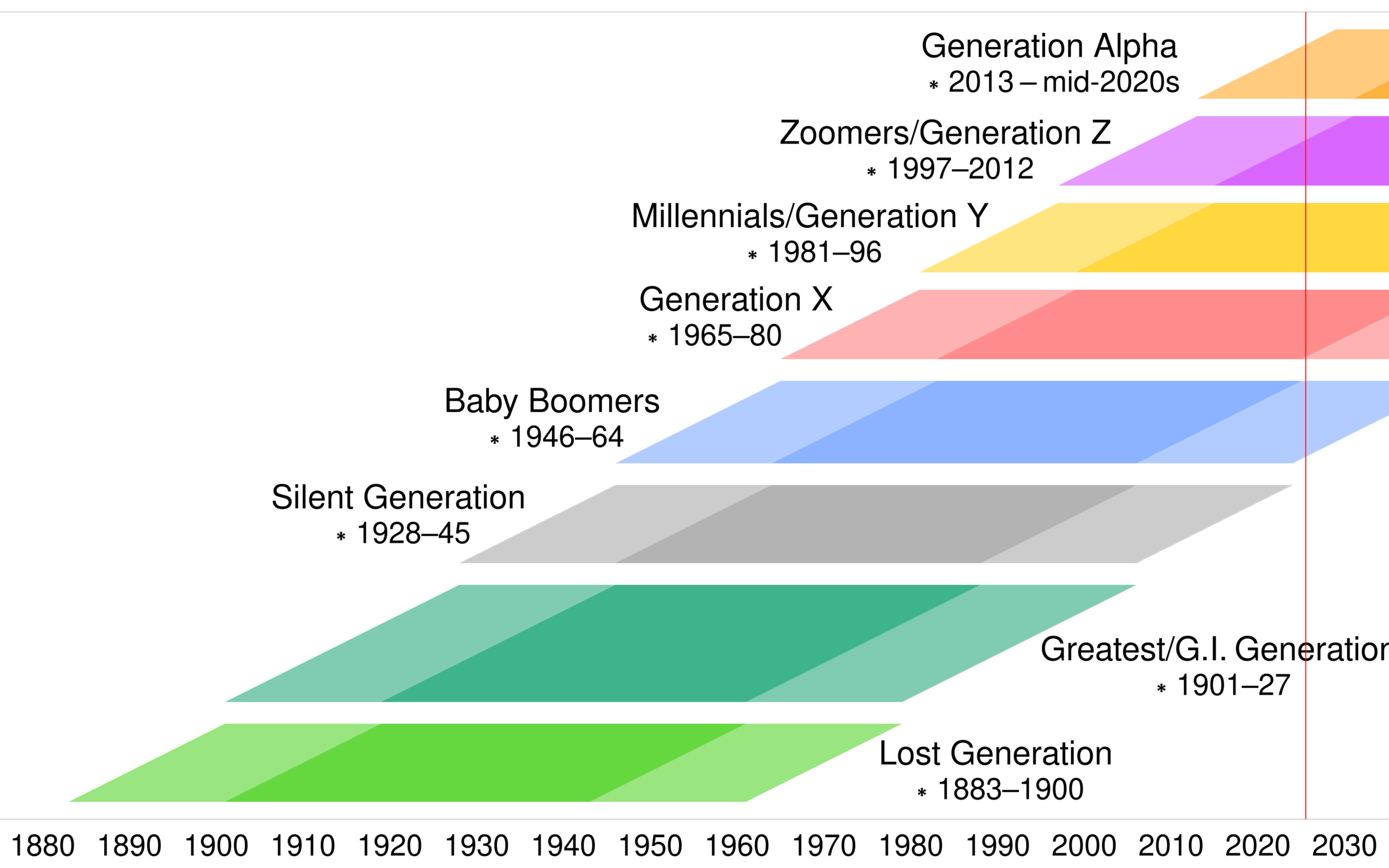
Credit: Rich Farmbrough (Wiki) 14 August 2025, Creative Commons Attribution-Share Alike 4.0 International license.
[3] AI Overview
It is common for people to have complex feelings about Gen Z, often simultaneously feeling inspired by their values and creativity while being concerned about issues such as mental health and social skills.
Here are common reasons for these mixed feelings:
Sources of Inspiration
Gen Z often inspires others through their:
- Authenticity and Self-Expression: The generation values being true to oneself (“it’s the authenticity for me (no cap)”) and uses fashion, social media, and other avenues as a means of establishing identity, rather than just chasing trends or status.
- Creativity and Tech-Savviness: Having grown up immersed in technology, Gen Z demonstrates significant creativity in digital spaces, including content creation and entrepreneurial pursuits.
- Values-Driven Focus: Many in Gen Z gravitate towards brands and causes that reflect their values, such as sustainability and social justice, and they demand purpose and ethical action from institutions.
- Diverse Perspectives: They are known for embracing diversity and inclusion, challenging traditional norms and fostering more accepting environments.
Areas of Concern
Simultaneously, concerns often arise regarding:
- Mental Health Epidemic: There has been a significant rise in anxiety, depression, and other mental health concerns among Gen Z, which many experts link to the rapid integration of smartphones and social media into daily life, replacing free play and real-world connection.
- Social and Communication Skills: Some employers and educators have noted potential issues with communication skills, suggesting that constant screen-based interaction may have hindered the development of traditional interpersonal skills.
- Over-reliance on Technology: The pervasive use of technology raises fears about its long-term effects on critical thinking and the ability to cope with pressure, as well as the potential for tech addiction.
- Loneliness: Despite being hyper-connected digitally, loneliness is considered a public health concern among young people, which can contribute to other social and health issues.