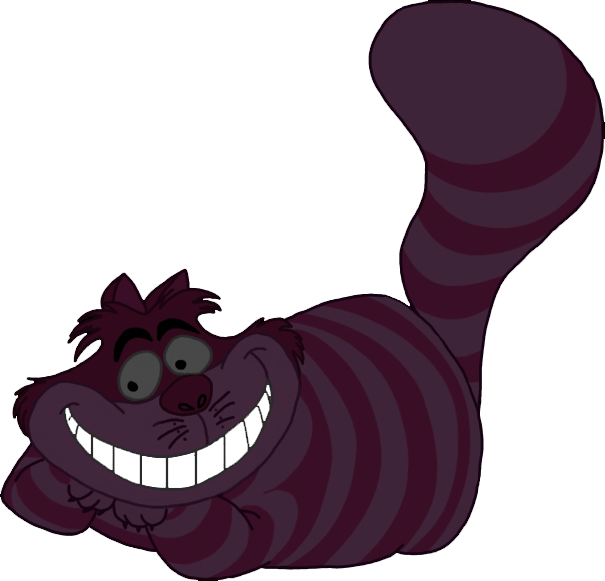
Magic can be a wonderful thing. In stories. Such as those set in the fictional country called Wonderland. In the 2013-2014 ABC TV series Once Upon a Time in Wonderland, there were three rules of magic [1].
You cannot:
- Raise (bring back) the dead
- Force someone to love you (make somebody fall in love)
- Change the past
But, of course, for fabulists and despots, rules get in the way. Even rules of magic [2]. Let alone the rule of law (or laws of logic & physics). Their desires seek to bend reality. To bring back deprecated tyranical notions, like zombies. To compel us to not believe what we see with our own eyes. And to forget history.

While often delightful, the price of magical tales is suspension of belief [3]. Even when cast with god-like characters (or advanced technology) which might offer plausibility. Yet, that indulgence can be a reach when there are no rules – no canon in evidence or by allusion.
When rules (limitations) are hidden or left to one’s imagination (as in loopholes), a reader / viewer may feel cheated – adrift in artifice. Lost in storycraft with arbitrary agency – without meritorious anchors, without any contours of conflict. Everything plays out in bad faith because any resolution may be trumped by ad hoc magic.
So, we get hollow heros (immoral, meritless achievements). Untrustworthy beacons (fickle oracles). And if any constraint may be bypassed, there’s no place to attain or regain safety – no closure (bogeymen under beds).
Even as metaphor, magic can be a slippery slope into arbitrariness. When rules have “fallen sloppy dead,” trust in our institutions (including referees) and communities falls. We become lost in a wander-land, a moral wasteland.
Whether framed as sorcery or witchcraft, magic has been a powerful pull in history. Even for American Puritans : “The ministers’ greatest cause for alarm was that magic appealed not only to those who rejected Puritanism, but also to church members …“
Puritans (at least in doctrine) believed that God was always watching …
And yet, that was not enough. Not enough assurance [assurance of salvation]. So, there was magic. Magic “made the world a more immediate and accessible place,” and played into that craving (hunger) for validation.
The contrast between official Puritan ministrations (which condemned magic) and popular magical practices reflected the challenge of moderating misinformation. A contest between the appeals of clerics and appeals of “animal spirits.”
That contrast persists in our contemporary culture (particularly in politics) as conspiracy theories – theories which may break rules or even lack rules.
We need wonder in our lives, in our stories, to stay a collective work in progress, to move beyond the baggage of behind. Governance should be about sharing power and interrelatedness – offering opportunities to grow together. And not about shackling some for the benefit of others, not about fervent faith fettering & dividing us yet again.
Elevating (or enabling) leaders who are convinced that breaking (hacking) reality is a good quest hijacks democracy. It invites bad grace and bad faith [4]. It breaks the social constraints of the original Puritan / Protestant work ethic – leaving a landscape aligned by the pursuit of ascendancy. It leaves markets without ethical limits, promotes the power of the one percent.
Breaking the rules of magic is akin to releasing Monsters from the Id into a promising wonderland.
Breaking the rules of magic is like ads which seek to make us love something that we don’t like. [5, 6]
What world do we want to live in? To what purpose? To divide or unify. An arc of otherness or togetherness. What stories do we want to tell – to model that vision? Across generations. What matters? – will everyone feel they matter in that quest?
Breaking our world is so much easier than mending it. Magic is in the mending, in cherishing earthly wonders. Magical sideshows remind us of our fragile nature – while riding on a seesaw.
Notes
[1] The American fantasy-drama series lasted one season.
• Wiki > Once Upon a Time in Wonderland
AI Overview
In Once Upon a Time in Wonderland (2013-2014), magic follows strict, foundational laws that prohibit bringing back the dead, forcing love, and changing the past. Genie magic is bound by these rules and the limitation of three wishes, though these can be bypassed by combining the power of three genies.
Key Rules and Limitations of Magic:
The Three Prime Laws: Even the most powerful magic cannot legally bring back the dead, make someone fall in love, or change the past.
Genie Restrictions: Genies cannot kill, make people fall in love, or resurrect the dead. They must grant three wishes to the holder of their bottle.
The Price of Magic: Magic is rarely free, often requiring a sacrifice or having unforeseen consequences if not specific.
Breaking the Laws: Through the Spell of the Three Genies – requiring three genie bottles – a sorcerer can override these laws. Jafar successfully broke these laws to alter the past and resurrect the dead.
Heart Extraction: Similar to the parent show, hearts can be removed to control or kill someone.
Identity Restrictions: A genie’s word is their bond, and they cannot use their power for personal gain (e.g., creating wealth for themselves).
These rules, particularly the inability to break the three laws, are central to the plot as Jafar seeks to overcome them to gain ultimate power.
[2] In Once Upon a Time in Wonderland, Jafar obtains supremacy only via the complicity (e.g., fealty) or subjugation (heart extraction or genie entrapment) of others with powerful agency. He uses “three genie lamps to change the laws of magic” and “becomes the most powerful sorcerer in all the realms.”
At the end of the series, Amara sacrifices her supreme power and herself – honors her debt to the Well of Wonders – in order to save her sons.
Jafar’s punishment is eternal service (as a genie) to others – power no longer of any value to himself (as per Identity Restrictions noted above).
[Transcript]
Once Upon a Time in Wonderland
S1:E13 “And They Lived …”
Alice: Cyrus, the water. Do it now.
Cyrus: Nyx, I return the water to you.
Jafar: That’s interesting. Let me guess. This water goes in the well, and the genie’s curse is broken.
Is that how she thought this would go? I thought so. Pity she’s not around to see her best-laid plan unravel so dramatically.
So now that I’ve stolen your water … what is it you plan to do?
Alice: Nothing.
Jafar: Nothing.
Alice: That’s right, J’afar. I plan to do nothing. I told you it wasn’t me who was going to defeat you.
Because you didn’t steal that water from me. You stole it from her.
Nyx: This water is not yours to take.
You’ve let your desires override the fates. Now your fate will be to serve the desires of others.
Jafar: (Screams) No! … (Disappears into bottle)
[3] And all the tropes.
• tvtropes > Once Upon a Time in Wonderland
And Jafar’s power base of genie bottles reminds me of nations defining their supremacy based on the size of nuclear arsenals.
[4] In Walt Disney Animation Studios’ 2023 film “Wish,” King Magnifico’s power is based on wishes. In fact, holding hostage the wishes of his subjects.
[5] Or like ads designed to get us hooked on snake oil or slop.
Slop …
Enshittification is an aspect of degrading (breaking) how we experience reality. Imagine magical sludge (“please, sir, I want some more [gruel]”), for which T&C, while overwhelming, at least spells out the rules.
- define:enshitification in contemporary context
- define:slop in contemporary context
AI Overview [of slop]
In a contemporary context, “slop” (often referred to as “AI slop”) is defined as low-quality, often formulaic digital content generated in high volume by artificial intelligence, typically designed to grab attention, generate ad revenue, or manipulate search engine rankings. It is characterized by a lack of human effort, depth, or originality, and is viewed as digital clutter or “filler”.
Merriam-Webster named “slop” its 2025 Word of the Year due to its, and its variants’, surge in popularity, reflecting a growing cultural fatigue with the saturation of AI-generated materials online.
Key Aspects of Contemporary “Slop”:
Definition & Characteristics: It includes, but is not limited to, nonsensical AI images (e.g., distorted hands or faces), AI-written articles, shallow blog posts stuffed with keywords, and fake news.
The “AI Trough”: The term evokes the image of “pig slop” or swill, implying that the internet has become a “digital trough” filled with worthless, mass-produced material, as described by the Dead Internet Theory.
Monetization & Engagement: Slop is not just low-quality content; it is often produced specifically to maximize profit via clicks and ad revenue, or to “game” algorithms.
Cultural Context: The term is used pejoratively, signaling contempt for the content’s lack of artistic value or authenticity.
Examples: Common examples include AI-generated, “engaging” images on social media and poor-quality AI-written books.
Variations: The term has spawned related jargon, including “slopper” (someone who creates or consumes this content) and “workslop” (useless AI-generated work documents).
While the term has its origins in earlier slang—such as “goyslop” (a term for low-quality, processed, or mass-produced food) – its 2024–2025 iteration is firmly rooted in the digital, AI-driven economy.
[6] Re “to get us hooked on,” witness this article on the Superbowl ads. Marketing and political campaign messaging. Pitches to gloss or gild (sweeten) our aspirations & ambitions. Pitches to “fix” bad vibes about a product or service.
Remember “tastes great, less filling?”
• Washington Post > Can these Super Bowl ads make Americans love something they don’t like? by Shira Ovide (February 8, 2026) – We asked experts to review four commercials trying to win over the AI-skeptical public. [Article includes a “What readers are saying” section.]
“The reason they’re having to advertise is reputation management because people are nervous” about AI, said Eric Wilson, who advises Republicans on digital strategies. These ads come loaded with weighty baggage. “It’s a lot like if Coca-Cola went onto the market and immediately jumped into a huge policy debate about the future of humanity,” Wilson said.
Frozen faith
(fettered by ice)
(wrecking ball to wonderland)
you’re so righteous,
your faith a virus,
feeling no shame,
shunning any blame,
as cold as ice,
whatever the price
you want to restore ‘paradise,’
say freedom’s but a sacrifice.
while frozen in your pit of blight,
you cast aside all outer light.
gagging any others’ advice,
you take tyranny as the price
it’s such an old playbook,
so you feel off the hook,
blinded by proud belief,
others get no relief,
safe in your serenity,
sanctified identity
(refrain)
you’re so righteous,
as cold as ice,
your faith dark device,
whatever the price
Notes
[1] My homage to Cold as Ice (1977 Foreigner song)